
Commercial Electrical Maintenance in Portland: How NFPA 70B Keeps People and Buildings Safe
Electrical maintenance is no longer optional. Since 2023, NFPA 70B — the national Standard for Electrical Equipment Maintenance — requires building owners to keep electrical equipment maintained under a documented program. For businesses searching for commercial electrical maintenance in Portland or Beaverton, the good news is that a simple annual service we call a “torque and clean” handles the biggest risks — and costs a fraction of one unplanned outage.
At Nexus Electrical Group (licensed, Oregon CCB #226988, with 30 years of experience in the electrical field), we open panels and equipment across the Portland metro every week. What we find inside neglected gear is remarkably consistent: blankets of dust, insect nests, and connections that have quietly loosened for years. Every one of those is a fire waiting for a reason — and every one is preventable.
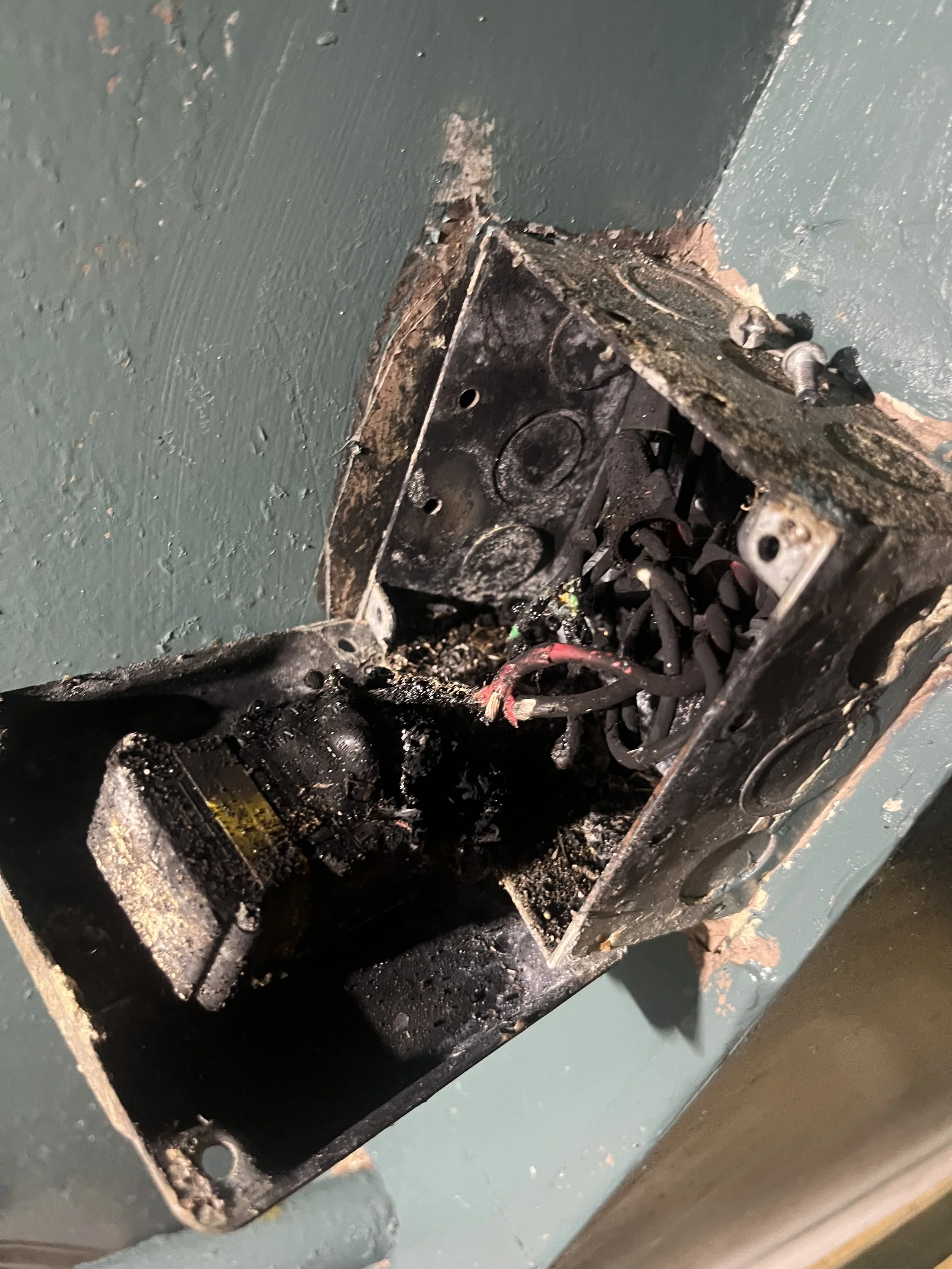
Neglected panel connections after years without maintenance — this is what happens when equipment isn’t torqued and cleaned.
Is electrical maintenance actually required? What NFPA 70B says
Yes. In 2023, NFPA 70B changed from a “recommended practice” to an enforceable standard — the word “should” became “shall” throughout. According to the Electrical Safety Foundation International, equipment owners shall now maintain electrical equipment per the manufacturer’s instructions and applicable standards, under a documented Electrical Maintenance Program (EMP).
An EMP under NFPA 70B must include:
Documented maintenance procedures for each type of equipment
A plan of regular inspections, servicing, and testing
Qualified personnel — the standard states electrical maintenance shall be performed only by qualified persons
Record keeping, so you can prove what was done and when
Continuous improvement based on what the inspections find
Why does this matter to a Portland business owner? Because after a fire or an injury, “we never maintained it” is now a documented deviation from a national standard. Insurers increasingly ask for maintenance records, and OSHA can point to consensus standards like NFPA 70B when evaluating workplace electrical safety. Documented maintenance is both the safest and the most defensible position.
How do NFPA 70, NFPA 70B, and NFPA 70E fit together?
NFPA 70 is the National Electrical Code (NEC) — the installation rules Oregon adopts and enforces through permits and inspections. NFPA 70E protects the workers who service equipment. NFPA 70B covers what happens for the decades after installation: keeping the equipment itself safe and reliable. Together they cover the full life of your electrical system.
NFPA 70 (NEC) — covers how electrical systems must be installed, including torque requirements for connections. Protects everyone who uses the building.
NFPA 70B (2023) — covers how equipment must be maintained after installation, now with mandatory “shall” language. Protects your building, your people, and your uptime.
NFPA 70E — safe work practices covering arc flash and shock protection during electrical work. Protects the workers servicing the equipment.
One NEC requirement worth knowing: since the 2017 edition, NEC 110.14(D) requires that where a manufacturer specifies a torque value, connections be tightened with a calibrated torque tool. “Hand tight plus a quarter turn” no longer meets code — and it never met physics.
How can dust and bugs inside electrical equipment start a fire?
Dust, lint, and insect debris cause electrical fires three ways: they blanket components so heat can’t escape, they clog ventilation, and — combined with moisture — they form conductive paths that let current arc, or “track,” across surfaces it was never meant to cross. Add one loose, overheating connection and the same debris becomes the fuel.
The scale of the problem is real. The U.S. Fire Administration estimates 7,400 nonresidential building fires were caused by electrical malfunction in 2023 alone — about $354 million in property loss in a single year. These aren’t exotic failures; they’re overwhelmingly ordinary panels, connections, and wiring that degraded without anyone looking.
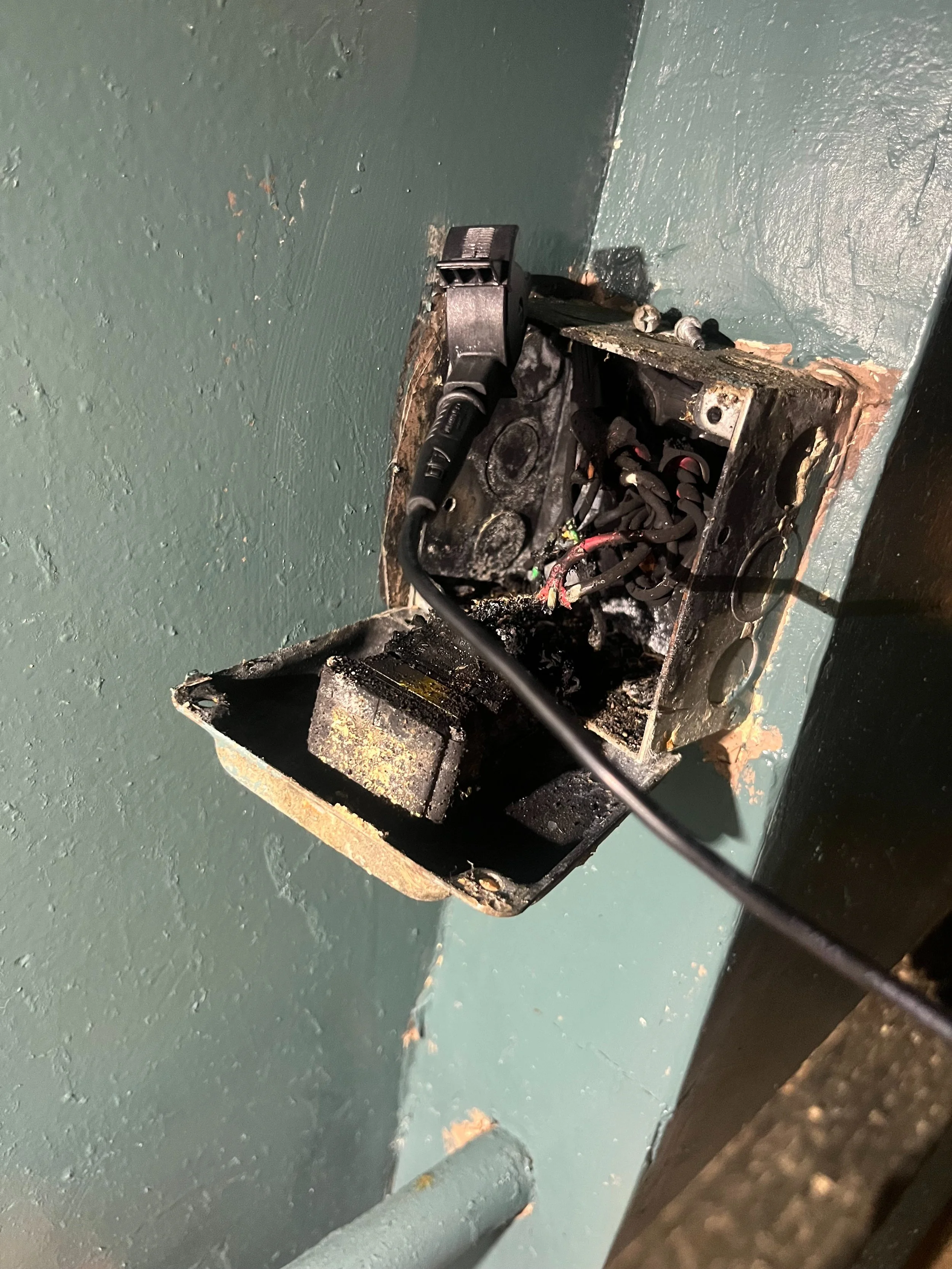
Insects deserve special mention because Portland-area business owners are always surprised by them. Ants, wasps, and spiders nest inside warm enclosures; their bodies and nesting material are enough to bridge energized parts. We have opened equipment where the only thing standing between normal operation and a phase-to-phase fault was a debris pile nobody knew existed. In equipment that has never been opened since installation, we find this routinely.
What is a “torque and clean” — and how does it save you thousands?
A torque and clean is the core preventive maintenance visit: a licensed electrician de-energizes your equipment, cleans out contamination, and re-tightens every connection to the manufacturer’s exact torque specification with a calibrated tool. It directly attacks the two most common failure paths — contamination and loose connections — in one scheduled visit.
Loose connections are more common than almost anyone believes. Field testing reported by IAEI Magazine found that only about 25% of connections made without a torque wrench fall within ±20% of the manufacturer’s specified torque — meaning roughly 75% are wrong. A loose lug builds resistance, resistance builds heat, and heat eventually becomes thermal runaway: glowing connections, cooked insulation, and in the worst case, fire.
What happens during the visit
De-energize and verify. Power is shut down and tested — this work is never done live.
Inspect. We look for heat discoloration, corrosion, pest activity, moisture, and damaged components.
Clean. Dust, debris, and nesting material are removed with equipment rated for the job.
Torque. Every accessible connection is tightened to the manufacturer’s specification with a calibrated torque tool, per NEC 110.14(D).
Document. You get a record of what was found and corrected — the paperwork your NFPA 70B maintenance program and your insurer want to see.
How often should a commercial building schedule a torque and clean?
NFPA 70B doesn’t hand every building the same interval — maintenance frequency is meant to scale with equipment type, operating environment, and how critical that equipment is to your business. As a practical baseline, most Portland-area commercial properties do well with an annual torque and clean, while buildings in harsher environments — commercial kitchens, manufacturing floors, anywhere with heavy dust or moisture — often benefit from checking in twice a year. A qualified electrician can help you set a schedule that matches your equipment and your risk.
The bottom line
A torque and clean is a small, predictable expense next to the cost of a single unplanned outage, an insurance claim, or worse. It’s also the most direct way to show you’re meeting your obligations under NFPA 70B, with documentation to back it up.
Ready to protect your building? Nexus Electrical Group serves commercial properties throughout Portland and Beaverton. Contact us today at (971) 410-7073 to schedule your torque and clean and keep your equipment, your people, and your NFPA 70B compliance record protected.