
Knob-and-Tube Wiring Replacement in Portland: Inside a North Portland Rewire That Made a 1940s Home EV-Ready
Knob-and-tube wiring replacement in Portland means removing a home’s original ungrounded wiring — standard in houses built from the 1880s through the 1940s — and rewiring those circuits with modern grounded copper. Our crew just finished exactly that project in North Portland: a full knob-and-tube abatement on a 1940s-era home, paired with a 200-amp electrical panel upgrade that leaves the house ready for a Level 2 EV charger whenever the owners want one. Here’s what the job involved — and what it means if your own home is still running on knob-and-tube.
By the team at Nexus Electrical Group — licensed electricians (Oregon CCB #226988) with 30 years of experience in the electrical field, serving Beaverton and Portland. Published July 28, 2026 · Last updated July 28, 2026.
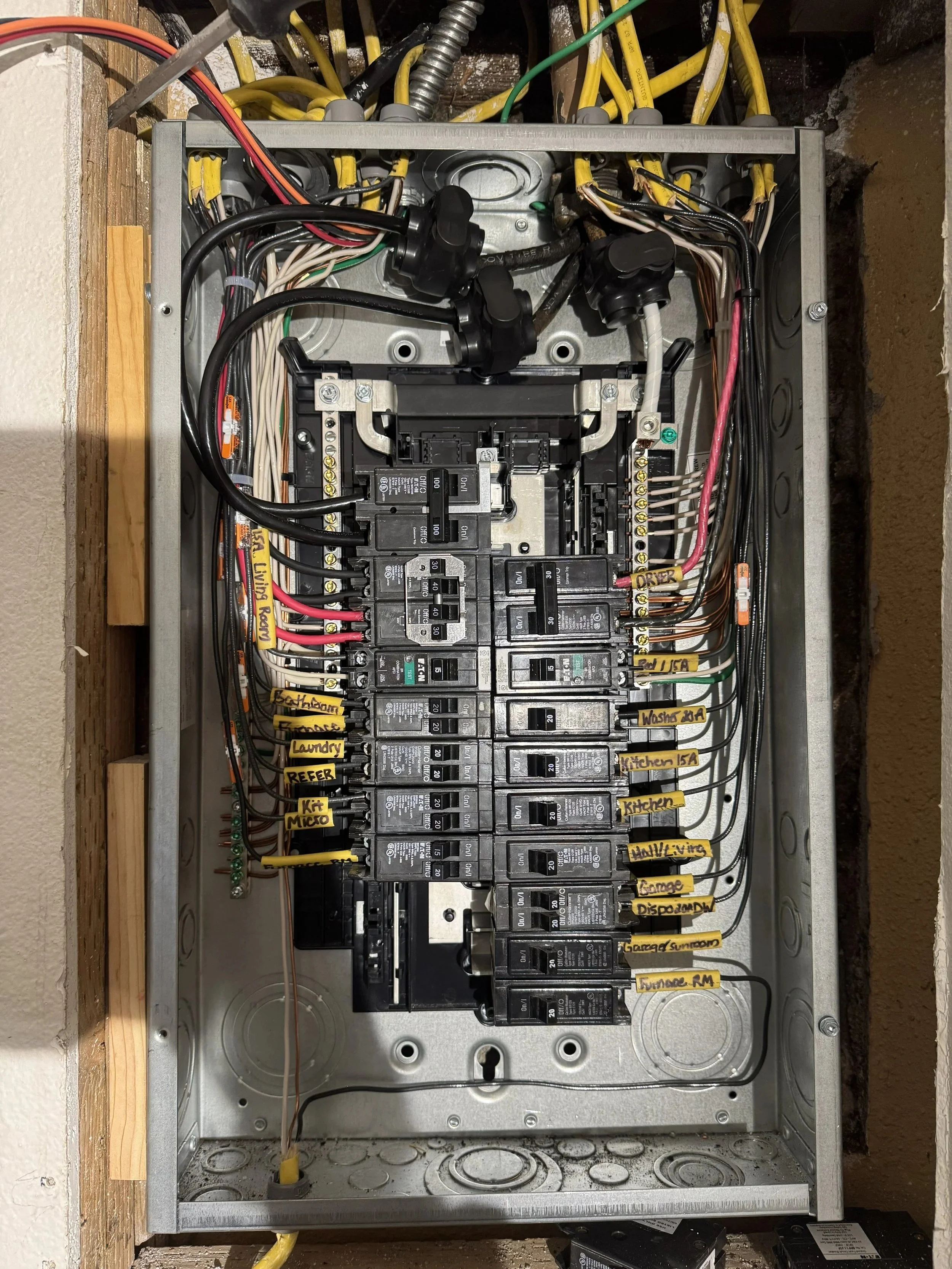
knob and tube abatement, North Portland
What is knob-and-tube wiring, and why does it have to go?
Knob-and-tube wiring is an early electrical system that runs individual cloth-insulated copper wires through ceramic knobs and porcelain tubes. It was the standard from roughly the 1880s into the 1940s, and it’s obsolete for three reasons: it has no ground wire, its insulation is failing with age, and it can’t safely carry a modern household’s load.
The missing ground is the core problem. Knob-and-tube is a two-wire system, so there’s no ground path for three-prong appliances or fault current. It was also designed to shed heat into open air — which is why, according to InterNACHI, the National Electrical Code has prohibited burying knob-and-tube in thermal insulation since the 2008 edition. In a Portland attic that’s been air-sealed and insulated for energy efficiency, that’s a genuine fire risk hiding above the bedrooms.
Age compounds everything. The original insulation on these wires is now 80 to 140 years old — brittle, flaking, and often spliced by generations of amateur repairs, sometimes protected by oversized fuses that defeat the system’s only safety margin.
And then there’s insurance: many carriers refuse, cancel, or non-renew coverage on homes with active knob-and-tube, or require an electrician’s certification or full replacement first. It’s one of the most common reasons Portland homeowners finally remediate. (Confirm the specifics with your own insurer — requirements vary.)
Knob-and-tube wiring vs. modern grounded wiring
Grounding — Knob-and-tube: none, two-wire with no ground path for faults or surge protection. Modern: grounded three-wire copper on every circuit.
Insulation — Knob-and-tube: cloth/rubber, now 80–140 years old and brittle. Modern: thermoplastic insulation.
Attic insulation — Knob-and-tube: NEC has prohibited burying K&T in insulation since 2008, a fire risk. Modern: designed to run through insulated cavities.
Capacity — Knob-and-tube: low ampacity, fuse-based, overloads under modern demand. Modern: sized for HVAC, kitchens, EV charging.
Insurance — Knob-and-tube: many insurers decline, cancel, or non-renew coverage. Modern: standard coverage.
Code status — Knob-and-tube: obsolete, not allowed in new work. Modern: current standard.
What did the North Portland knob-and-tube project involve?
This project was a whole-home knob-and-tube abatement plus a 200-amp service upgrade on a 1940s home in North Portland. In practical terms: we de-energized and removed the old ungrounded circuits, rewired them with grounded copper, replaced the panel, and left the home with capacity to spare for a future Level 2 EV charger. Every step was permitted and inspected.
Here’s how a project like this runs:
Assessment and load calculation. We map which circuits are still knob-and-tube (partial past updates are very common), and calculate what the home actually draws now and will draw in the future — including that EV charger.
Permits. Rewiring and service upgrades require a City of Portland residential electrical permit and inspection. We pull the permit and handle the inspector.
De-energize and remove. The old knob-and-tube circuits are safely disconnected and the accessible wiring removed — no live legacy wire left behind walls to confuse the next remodel.
Rewire with grounded copper. New circuits, proper junction boxes, and grounded three-prong outlets throughout the affected areas.
Upgrade the panel to 200-amp service. The old fuse-era equipment gives way to a modern breaker panel with real grounding. On its own this is typically about a one-day job — folded into a rewire, it’s the obvious moment to do it.
Inspection and closeout. The city inspector signs off, and the homeowner gets documentation — which is exactly what insurers and future buyers want to see.
North Portland is prime territory for this work. Neighborhoods like Overlook, Arbor Lodge, Kenton, and St. Johns are full of pre-war bungalows and foursquares, and active knob-and-tube still turns up constantly during home sales, insurance renewals, and remodels. A whole-home rewire like this one typically takes several days to a few weeks depending on the home’s size and how accessible the wiring is.
Why pair a 200-amp panel upgrade with the rewire?
Because the circuits are already being rebuilt, so the moment is efficient: one project, one permit cycle, one inspection. Most Portland homes of this era have 60–100-amp service — plenty for 1946, not for a household running a heat pump, an induction range, and an EV charger. Modern all-electric homes typically want 200-amp service.
If your home hasn’t had a rewire but shows the classic signs — tripping breakers, flickering lights, a warm panel, a daisy-chain of power strips — the panel may be telling you it’s out of headroom. Our electrical panel upgrade service starts with a free peak-power-demand assessment, so you know exactly what your home draws before spending a dollar.
What does “EV-ready” actually mean for an older Portland home?
EV-ready means the home’s electrical service can support a dedicated 240-volt circuit for a Level 2 charger without overloading the panel. A Level 2 charger adds roughly 20–30 miles of range per hour of charging — versus 3–5 miles from a standard 120-volt outlet — and most home units draw 32–48 amps.
That’s a serious load, which is why a load calculation comes first and why EV charger installs in Oregon require a permit and inspection, per the U.S. Department of Energy’s Alternative Fuels Data Center. The install itself can be a plug-in NEMA 14-50 outlet or a hardwired unit.
This North Portland homeowner doesn’t own an EV yet — and that’s the point. With 200-amp service and a clean, grounded panel in place, adding a charger later through our EV charger installation service becomes a small, quick job instead of a second major electrical project.
How do you know if your home still has knob-and-tube wiring?
If your Portland or Beaverton home was built before about 1950, assume knob-and-tube is possible until proven otherwise. The tell-tale signs:
Ceramic knobs and porcelain tubes visible in the attic, basement, or crawlspace
Cloth-covered wiring running through joists
Two-prong outlets that were never updated
A fuse box instead of a breaker panel
Fuses that blow regularly under normal use
A mix of old and new wiring from partial past updates — very common; earlier owners often replaced only the easy-to-reach circuits