
Home Sauna Wiring in Beaverton: What Installing a Traditional 240V Sauna Really Takes
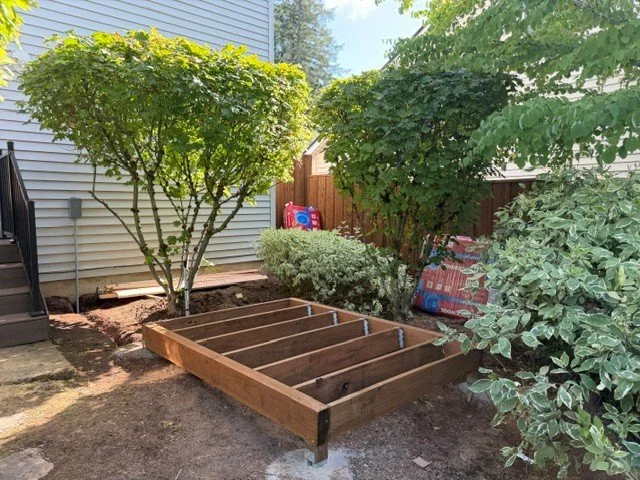
A traditional electric sauna needs its own dedicated 240-volt circuit — hardwired to a correctly sized double-pole breaker, not plugged into a standard wall outlet. On a recent home sauna wiring job in Beaverton, our licensed team ran a brand-new dedicated 240V circuit for a homeowner’s traditional electric heater so it could reach full heat safely and to code. Below, we walk through exactly what that job involved, what the electrical code requires, and what you can expect if you’re planning a sauna of your own in Beaverton or Portland.
We’re Nexus Electrical Group, licensed electricians (Oregon CCB #226988) with 30 years in the electrical field, and a sauna circuit is close cousin to the 240V dedicated circuits we run for EV chargers and ranges every week.
What electrical does a home sauna need?
Most traditional home saunas need a dedicated 240-volt circuit, hardwired directly to the heater, with a double-pole breaker sized to the heater’s wattage and a disconnect within sight of the unit. Any electric heater rated 3 kW or higher runs on 240V — a standard 120V outlet simply can’t deliver the power.
Sauna heaters are treated as a continuous load, so the 2023 National Electrical Code (Article 424) requires the circuit to be sized to 125% of the heater’s full-load amperage. A heater pulling 25 amps, for example, needs a 40-amp breaker. The heater must also be hardwired (not on a cord-and-plug) and needs a readily accessible disconnecting means. In Oregon, a new 240V circuit like this requires an electrical permit and inspection.
How we wired a recent Beaverton sauna installation
The homeowner had bought a traditional Finnish-style electric sauna with a 6 kW heater and wanted it running reliably in their spare room. Our first step was a load calculation on the existing electrical panel to confirm it had room for the new circuit. It did — the 200 amp panel had ample spare capacity, so no panel upgrade was needed.
From there, the job was clean and straightforward for a licensed crew:
Ran a new dedicated 240V circuit from the panel to the sauna on a double-pole breaker.
Pulled copper wire, sized for the heater’s continuous load per code.
Hardwired the heater and installed a disconnect within sight of the unit.
Pulled the electrical permit and had the work inspected and signed off.
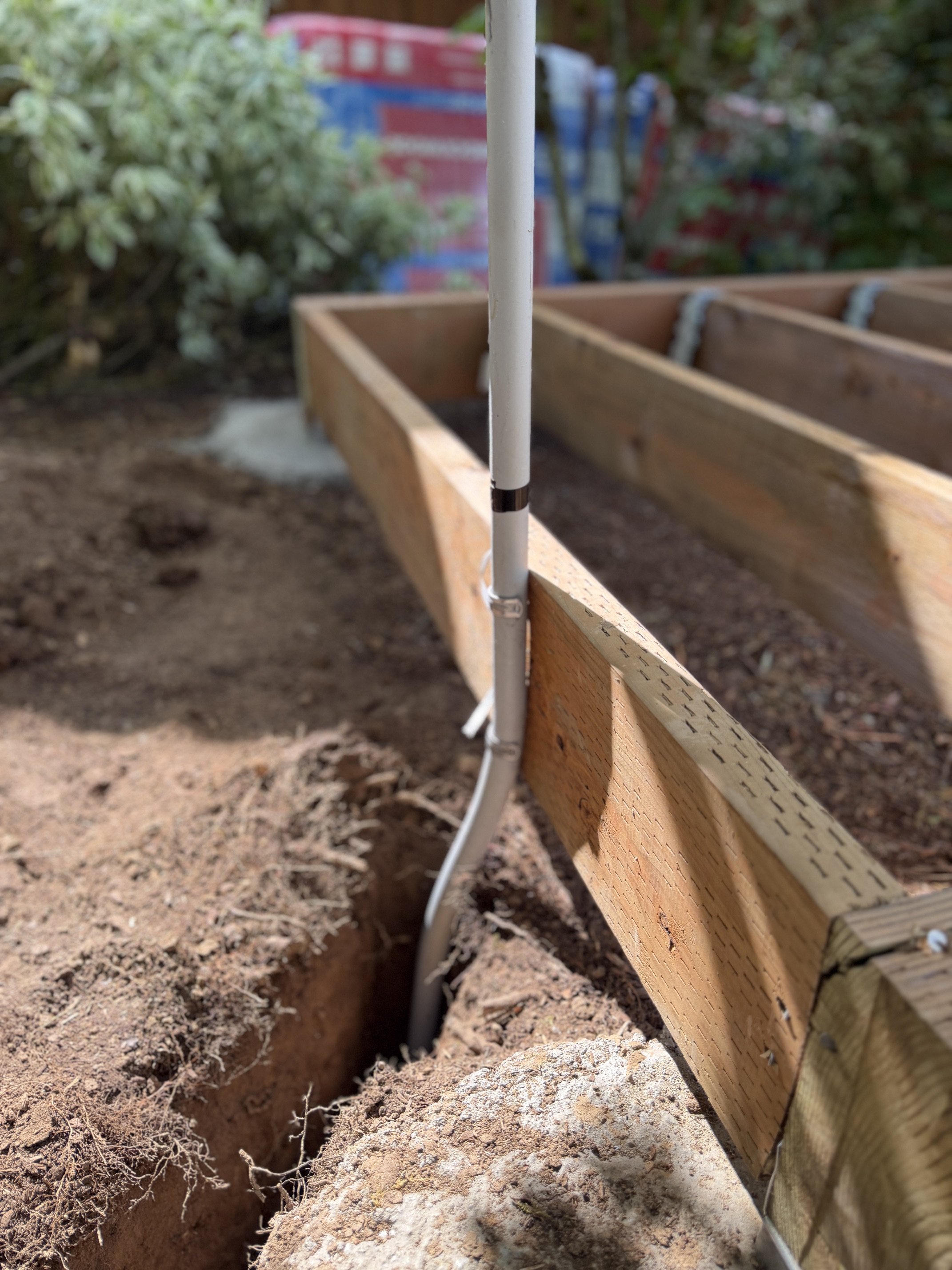
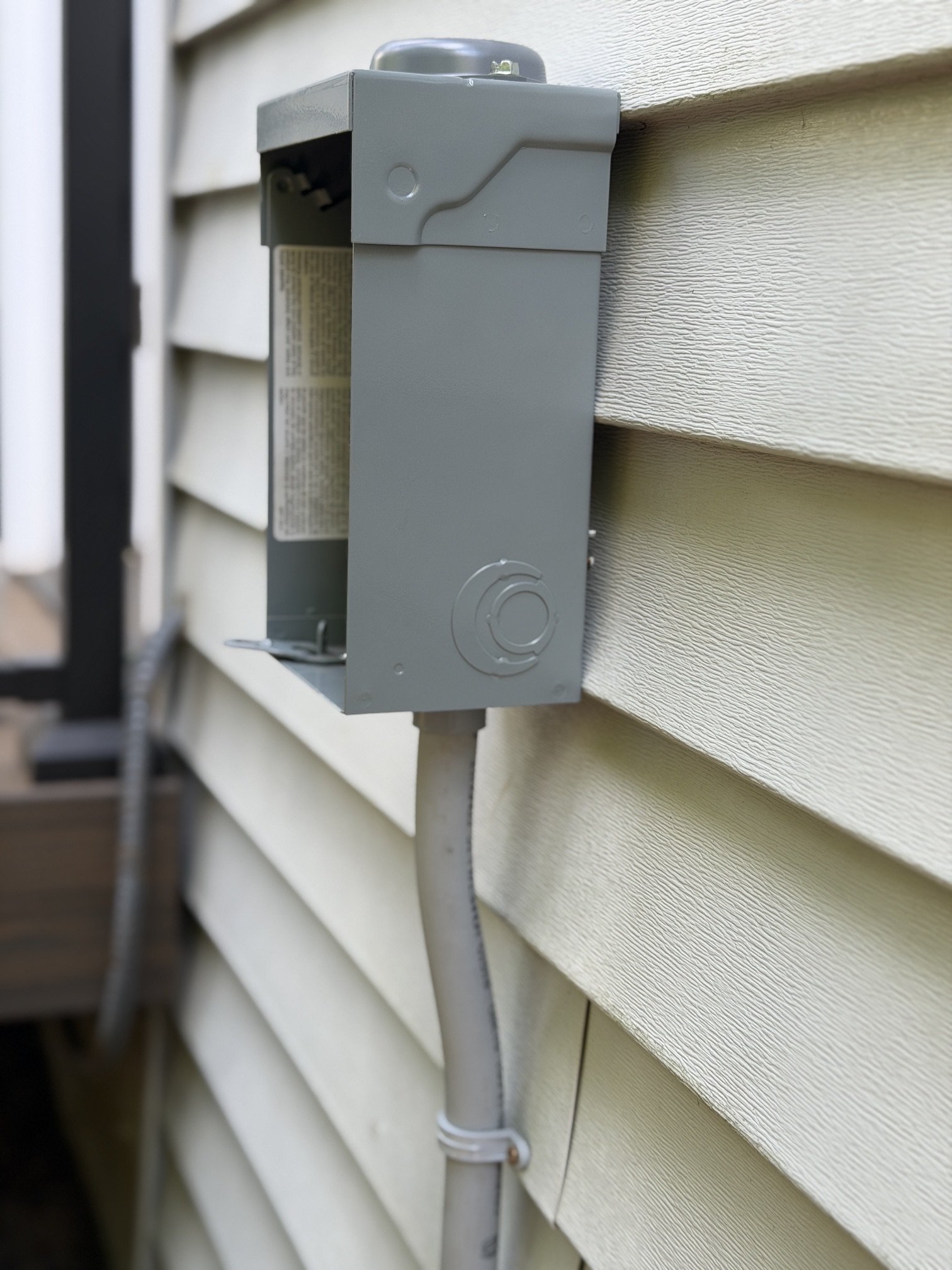
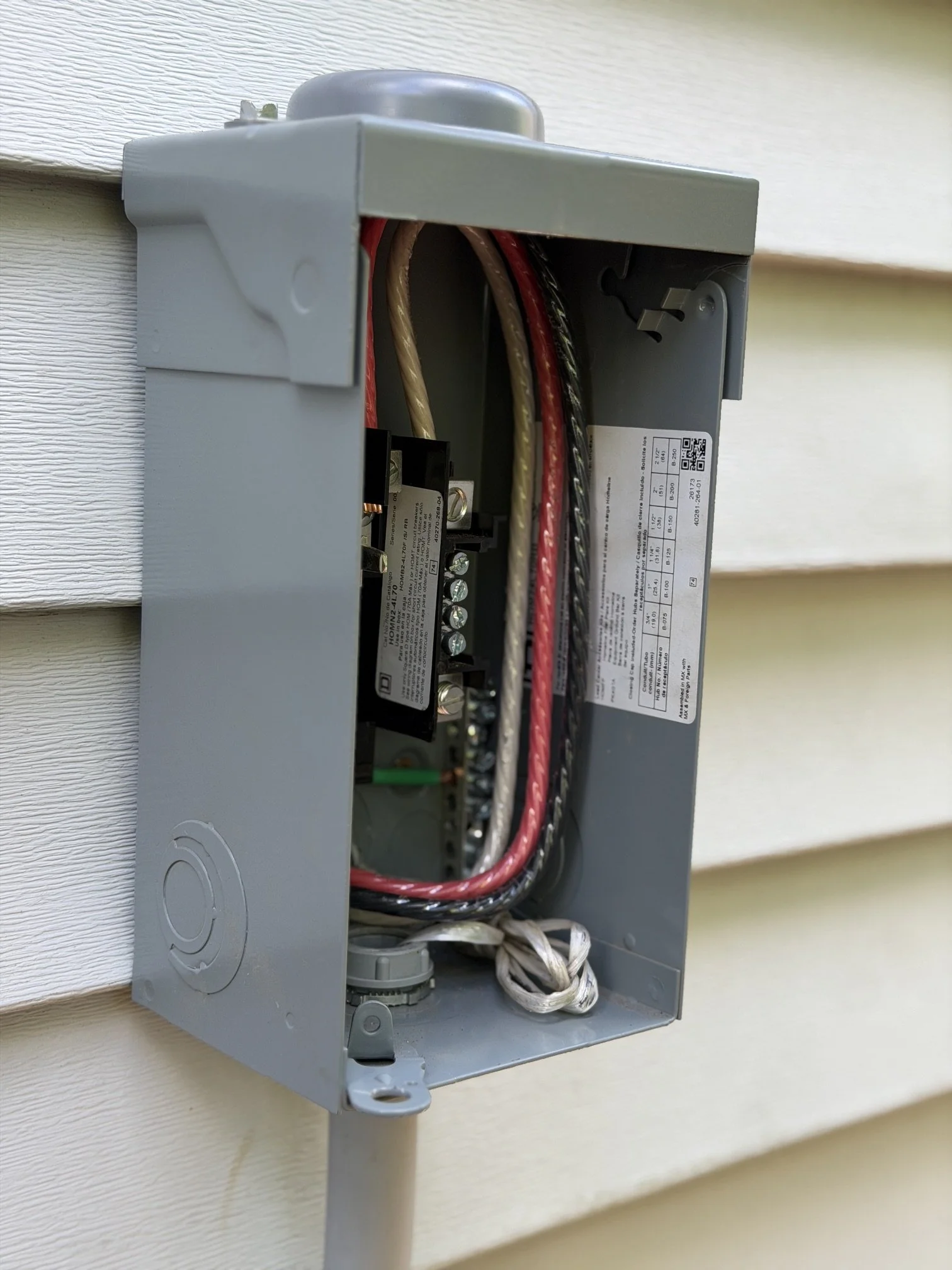
The homeowner went from an unpowered sauna cabin to hot, code-compliant heat — no guesswork, no fire risk from an undersized circuit. (Eric — confirm the bracketed heater size, breaker, and wire gauge above so the numbers match the actual job.)
Does a home sauna need 120V or 240V?
It depends on the sauna. Small 1–2 person infrared cabins and tiny plug-in heaters can run on a standard 120V/15A circuit (up to about 1,800 watts). But any traditional electric heater of 3 kW or more requires 240V and must be hardwired. Here’s the quick comparison:
120V circuit
Best for: Small 1–2 person infrared cabins
Max power: ~1,800W (15A) / 2,400W (20A)
Connection: Often cord-and-plug
Typical use: Plug-and-play infrared
240V circuit
Best for: Traditional electric heaters 3 kW+
Max power: Up to ~12 kW+ depending on heater
Connection: Hardwired, dedicated circuit
Typical use: Finnish-style traditional saunas
What size breaker and wire does a sauna heater need?
The breaker and wire are sized to the heater’s wattage, then bumped up 25% because it’s a continuous load. As a general guide for common 240V heaters on short indoor copper runs:
3–5 kW
Full-load amps: ~12–21 A
Breaker (double-pole): 30 A
Copper wire: 10 AWG
6 kW
Full-load amps: ~25 A
Breaker (double-pole): 40 A
Copper wire: 8 AWG
8 kW
Full-load amps: ~33 A
Breaker (double-pole): 50 A
Copper wire: 8 AWG
10.5 kW+
Full-load amps: ~44 A+
Breaker (double-pole): 60 A
Copper wire: 6 AWG
These are typical values — the exact breaker and wire gauge depend on your specific heater’s nameplate rating and the length of the wire run, which is why sizing is a job for a licensed electrician, not a guess. An oversized breaker is a fire hazard; an undersized one causes nuisance tripping.
Do you need a permit to install a sauna in Beaverton or Portland?
Yes. Installing a new 240V circuit for a sauna heater requires an electrical permit and inspection in Oregon. According to the City of Portland’s residential electrical permitting, new circuits and hardwired equipment are permitted work, and the Oregon Building Codes Division sets the statewide rules that Beaverton and Washington County follow.
A licensed contractor pulls the permit and schedules the inspection as part of the job — so a permitted, inspected install protects your homeowner’s insurance and shows up clean at resale. Skipping the permit is the kind of shortcut that surfaces at the worst possible time.
Does a sauna heater need GFCI protection?
Sometimes — it depends on the location and your local inspector. GFCI protection (NEC 210.8) is generally required for wet locations and outdoor installs, so an outdoor sauna or one in a bathroom typically needs it. Many heater manufacturers, on the other hand, warn against GFCI on the heater circuit because the heating elements can cause nuisance trips.
Because the rules vary by heater model and by the Authority Having Jurisdiction, this is exactly the kind of detail a licensed local electrician confirms with the inspector before wiring — rather than a homeowner discovering it at inspection.
Will your electrical panel handle a sauna?
A sauna heater can add 25–50 amps of demand to your home. Whether your panel can absorb that depends on its size (older Beaverton homes often have 100-amp service) and everything else already drawing power — HVAC, an EV charger, a heat pump, an electric range. That’s why we start every job with a load calculation.
If the panel doesn’t have room, the fix is an electrical panel upgrade — usually a one-day job that swaps you to 200-amp service and adds capacity for the sauna and whatever comes next. Not sure where your panel stands? We offer a free peak-power-demand assessment that answers exactly that.
How much does it cost to wire a home sauna in the Portland area?
For a standard indoor traditional sauna, wiring a new dedicated 240V circuit typically runs $450 to $1,200, depending on the distance from the panel and how easy the wire run is. Costs go up for long or difficult runs, outdoor saunas, or if the panel needs more capacity first. We give free, upfront estimates so there are no surprises.
Frequently asked questions about home sauna wiring
Can I plug a traditional sauna into a regular outlet?
No. Any traditional electric sauna heater rated 3 kW or higher needs a dedicated 240-volt circuit and must be hardwired. A standard 120V outlet can only deliver about 1,800 watts, far too little for a traditional heater, and overloading it is a fire risk.
Does a home sauna need its own circuit?
Yes. Sauna heaters require a dedicated circuit with no other outlets or appliances sharing the breaker. This is a code requirement, since they’re treated as a continuous load, and it prevents nuisance tripping and overheating on shared wiring.
What size breaker does a 6 kW sauna heater need?
A 6 kW heater at 240V draws about 25 amps. Because it’s a continuous load, the code requires sizing the circuit to 125% of that, so it typically lands on a 40-amp double-pole breaker with 8 AWG copper wire. Always size to your heater’s actual nameplate rating.
Do I need a permit to install a sauna in Beaverton?
Yes. Running a new 240V circuit for a sauna heater requires an electrical permit and inspection in Oregon. A licensed contractor pulls the permit and schedules the inspection as part of the job, which also protects your insurance and resale value.
Does a sauna heater need GFCI protection?
It depends on the location and your local inspector. Outdoor saunas and wet-location installs generally require GFCI protection, while many manufacturers advise against it on the heater circuit due to nuisance tripping. A licensed electrician confirms the requirement with the Authority Having Jurisdiction.
Will installing a sauna require an electrical panel upgrade?
Not always. If your panel has spare capacity, we simply add the new circuit. If it’s near its limit, common in older 100-amp Beaverton homes, a panel upgrade to 200-amp service may be needed first. A quick load calculation tells us which.
Planning a sauna? Get it wired right the first time
Our licensed Beaverton electricians will size the circuit, pull the permit, and hardwire your sauna heater to code, and tell you up front whether your panel is ready. Book a free estimate or ask about our $300-off coupon and free peak-power-demand assessment.
Call or text 971-410-7073. Book online. See more of our work on our projects page.
Written by the team at Nexus Electrical Group, licensed electricians (Oregon CCB #226988) serving Beaverton and Portland, Oregon, with 30 years of experience in the electrical field. We install EV chargers, upgrade electrical panels, remove knob-and-tube wiring, and install backup generators across the Portland metro.
Published: July 18, 2026. Last updated: July 18, 2026.